REGISTRATION IS OPEN FOR “THE ART OF PAYMENTS”
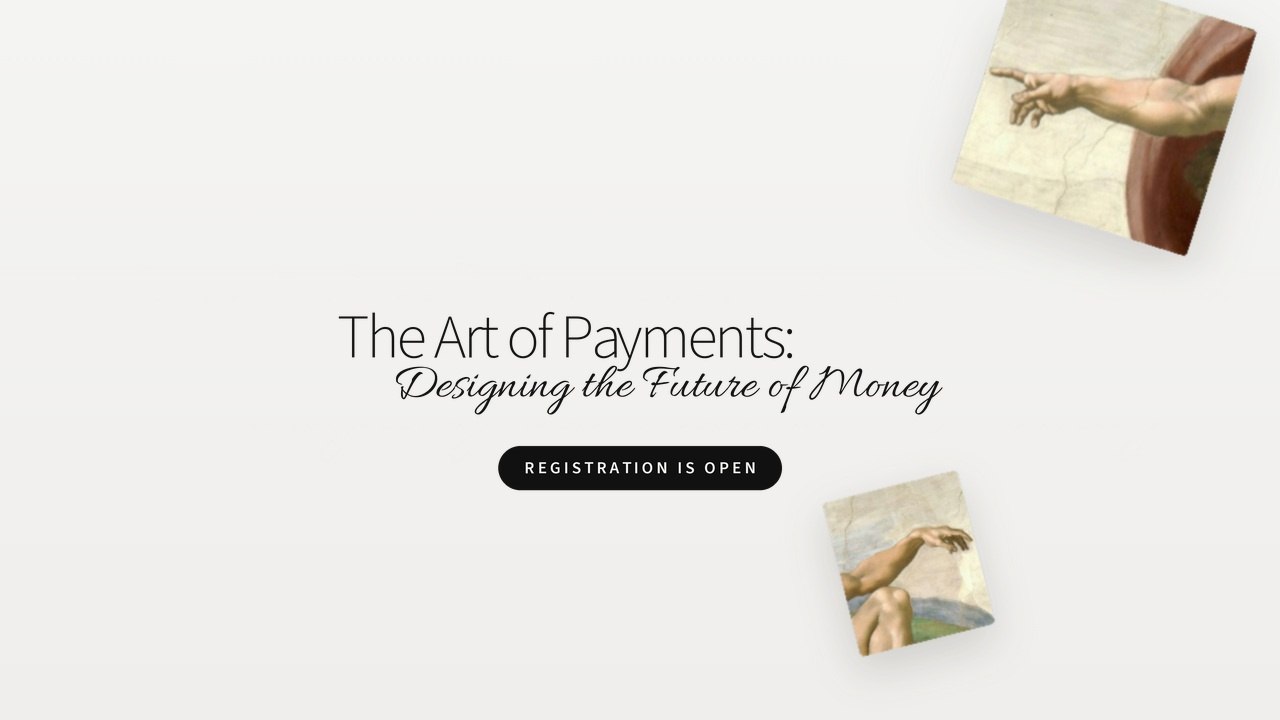
Registration for The Art of Payments: Designing the Future of Money is open. The conference takes place on October 21 at the InterContinental Mauritius Resort in Balaclava.
Why this conversation, and why now
The G20 set targets for 2027: cross-border payments that are cheaper, faster and more transparent. Most corridors are nowhere close.
Mauritius, meanwhile, launched its National Fintech Strategy 2026-2030 in June, positioning the island as a trusted platform for digital finance in Africa. The next ESAAMLG mutual evaluation is approaching, with the onsite visit expected in early 2028. The island is making promises and preparing to be examined on them at the same time.
Everyone is discussing this, but separately. Regulators talk to regulators, lawyers to lawyers, compliance teams to each other. The operators who actually move the money are rarely in any of those rooms.
On 21 October we put them in the same one.
Panel I – Where Money Moves Next
The session runs for an hour and it is about why moving money across borders keeps being slow. It also looks at whether routing through different systems can fix some of that and if Mauritius can actually become a payments hub for the region using its fintech plans.
Mahen Govinda, CEO of MITCO, moderates. Each speaker holds a different angle, so the discussion builds rather than loops:
– Sonali Ramsohok of EDB Mauritius speaks for the jurisdiction: what companies setting up here actually say about payment friction and banking access, how the MauCAS link with India's UPI works beyond the plumbing, and where Mauritius stands against Dubai, Kigali, Nairobi and Singapore.
– Ashveen Gopee of PwC Legal brings the law. A payment now passes through an orchestrator, several providers, correspondent banks and sometimes a stablecoin leg. When it goes wrong, who is legally responsible, and is Mauritian law ready for chains like that?
– Naushad Khadun, Certified Anti-Money Laundering Specialist (ACAMS), takes the financial crime side. Compliance gets blamed for slow payments, but how much of the delay is genuine risk and how much is poor data and duplicated checks? FATF's revised Recommendation 16 pushes richer payer and payee information into every transfer. And de-risking continues to cut legitimate African businesses out of entire corridors.
– Bhavesh Nundlall of MAGMA Finance speaks as the operator. Clients complain less about speed than about unpredictability: unknown fees, unclear arrival times, silent compliance holds. What happens when a preferred rail goes down, and what real resilience looks like.
The panel closes with one-line predictions for 2030 and fifteen minutes of audience questions.
Panel II – Trust at the Speed of Money
The afternoon part shifted over to AI and how it shows up on both sides of things.
There was this case from January 2024 where an employee at Arup in Hong Kong got tricked by a fake video call and sent out transfers that came to around two hundred million Hong Kong dollars. Seeing a face you recognize does not really count as proof anymore. A newer example involved an AI agent that handled an intrusion into part of Hugging Face infrastructure all by itself.
Vikash Ramdin, CEO of Mauritius Africa Fintech Hub, moderates a conversation on what that means for regulated institutions.
– Sawkut Ally Rojid, Pro-Vice-Chancellor at the University of Mauritius, brings the evidence: whether AI genuinely changes the economics of financial crime, where models in KYC and AML are reliable and where they fail on bias, explainability and data quality, and the point at which "human in the loop" quietly becomes a rubber stamp.
– Nitish Caullychurn, Director of MAGMA Finance, argues for a Know Your Agent approach. Before an AI agent touches data, systems or payment tools, it needs a defined purpose, minimum permissions, action limits, logs, human approval for high-risk actions, and a way to stop it.
– Mahen Govinda returns as a speaker, this time from the client's chair. Repeated KYC and KYB requests on complex structures, who actually signs off an automated decision, and what a Board should see to oversee it properly.
– Naushad Khadun addresses false positives as a hidden cost, the typologies already reaching the region, and training that tests competence rather than attendance.
The underlying argument of the panel: compliance belongs in the product, not in the back office.
The rest of the day, and 3 CPD hours
The programme will commence with an official presentation regarding Mauritius being a doorway between Africa and Asia, and then a keynote presentation on the expectations from payment systems by 2030. Nitish Caullychurn closes the day on the shift from moving money to running it.
Attendees working in compliance, fiduciary and financial services can claim 3 CPD hours toward their annual requirement and receive a Certificate of Attendance confirming the points. The session is accredited and delivered by a qualified tutor.
Six sessions, one room, and the people who actually decide how money moves in this region.
The full agenda is here. Secure your seat at the MAGMA Fintech Conference. Book now on Otayo.